SELF ASSESSMENT SPECIALISTS SERVING HECKMONDWIKE
Self Assessment Tax Returns in Heckmondwike, West Yorkshire - The Complete Guide
Everything you need to know about self assessment as a sole trader, landlord, or individual in Heckmondwike - deadlines, penalties, allowable expenses, and how SAS Yorkshire Accountants makes the whole process stress-free.
Serving Heckmondwike Locally
Fixed Fee Pricing
Filed On Time Every Year
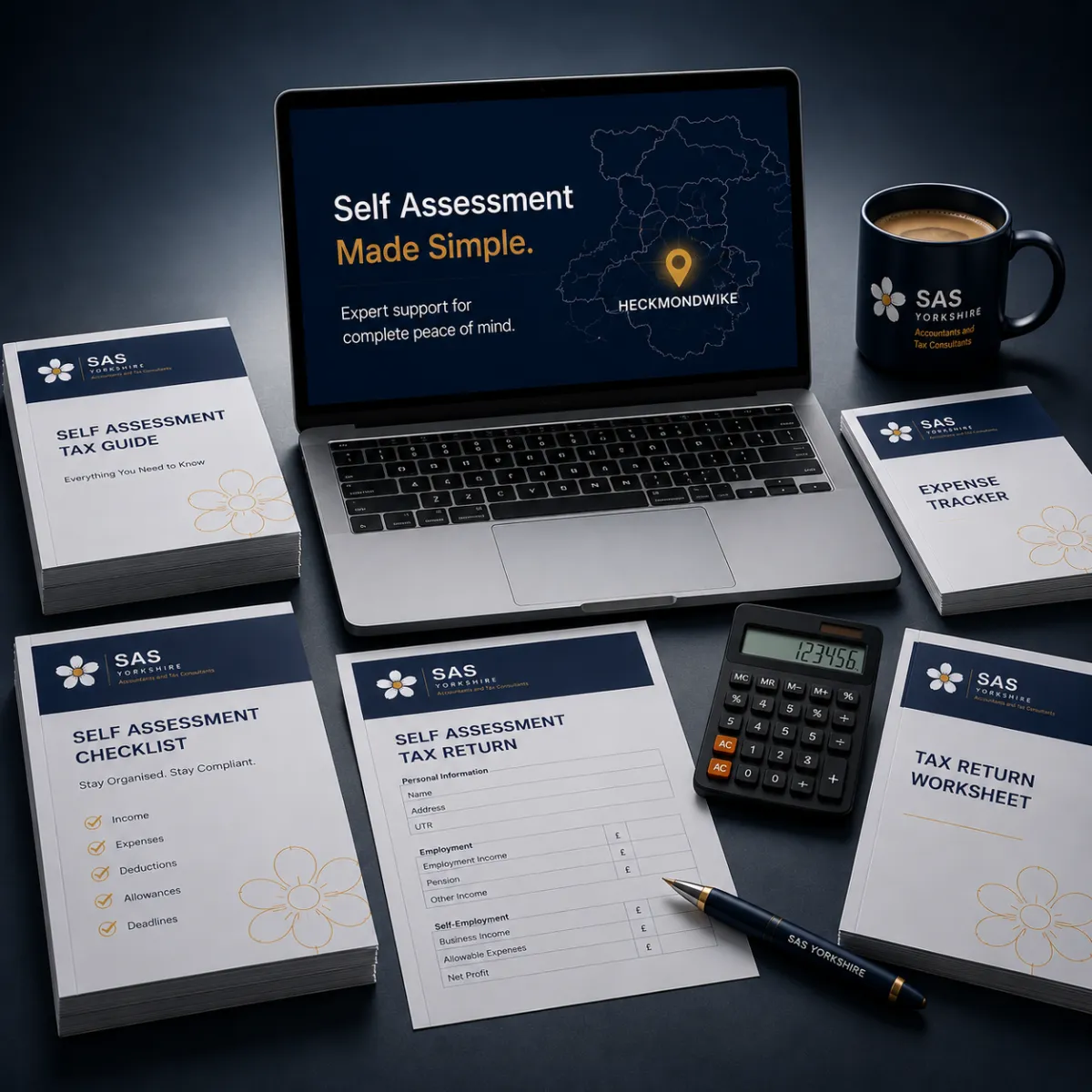
Online filing deadline: 31 January 2027
500+
Local Clients
100%
HMRC Compliant
98%
Client Retention
5/5
Client Rating
What Is a Self Assessment Tax Return?
A Self Assessment tax return is the system HM Revenue and Customs (HMRC) uses to collect Income Tax on earnings that aren't automatically deducted at source. While most UK employees pay tax directly through the PAYE system, individuals with other income sources—such as sole traders, company directors, freelancers, and landlords—must calculate and report their earnings directly. When you file a tax return, you provide a detailed declaration of your income and allowable expenses for the tax year, ensuring you pay the correct amount owed on your HMRC Self Assessment. It is a mandatory annual requirement for those who fall outside standard payroll taxation.
Who Needs to File a Self Assessment Tax Return in Heckmondwike?
If your tax affairs are more complex than standard PAYE, HM Revenue & Customs requires you to report your income. Review the common criteria below.
Self Employed or Sole Trader
If you earned more than £1,000 from self-employment during the tax year.
Landlords
If you receive taxable income from renting out a property in the UK or abroad.
Company Directors
If you are a director of a limited company with income not taxed under PAYE.
High Earners
If your income exceeds £100,000, or you need to pay the High Income Child Benefit Charge.
Savings and Investment Income
If you receive £10,000 or more in untaxed income from savings or investments.
Capital Gains
If you have sold property, shares or other assets and made a taxable profit.
Overseas Income
If you receive any foreign income that requires taxation within the UK.
HMRC Request
If HM Revenue & Customs directly sends you a notice requesting you to file a return.
Self Assessment Deadlines You Need to Know
Mark these critical HMRC dates in your calendar to avoid late penalties and ensure your tax affairs remain fully compliant.
5 October 2026
Registration Deadline
The latest date to tell HMRC you need to register for Self Assessment if you haven't filed before.
31 October 2026
Paper Tax Returns
Midnight deadline if you prefer to submit paper tax returns instead of filing online.
CRITICAL DEADLINE
31 January 2027
Online Filing & Payment
Deadline for submitting online tax returns and paying your tax bill in full.
31 July 2027
Second Payment
The final deadline for making your second payment on account for the tax year.
What Happens If You File or Pay Late?
HMRC imposes strict penalties for missing the Self Assessment deadline. Here is how they escalate over time.
£100 Immediate Penalty
Charged automatically the day after the 31 January deadline, even if you owe no tax or are due a refund.
3 Months Late
Daily penalties of £10 per day apply, up to a maximum of £900, on top of the initial £100 fine.
6 Months Late
A further penalty of £300 or 5% of the tax owed, whichever is greater, is added.
12 Months Late
Another £300 or 5% penalty is charged, and in serious cases this can rise to 100% of the tax due.
Interest is also charged daily on any tax paid late, separate from these fixed penalties.
Allowable Expenses and Tax Reliefs You May Be Missing
Maximize your tax efficiency by ensuring you claim all permissible business expenses and reliefs available to you.
Office and business premises costs
Rent, property insurance, utility bills, and security costs for your business premises.Working from home allowance
A proportion of your home utilities, council tax, and internet access if you regularly work from home.Travel and vehicle expenses
Business travel costs including train tickets, parking, and vehicle running costs for business journeys.Equipment and tools
Computers, software, and specialized tools required to perform your daily business operations.Professional fees and subscriptions
Trade body memberships, professional subscriptions, and fees for accountants or solicitors.Marketing and advertising
Website hosting, digital advertising, print materials, and other promotional campaign costs.Staff costs
Employee salaries, bonuses, pensions, and training costs associated with your workforce.Pension contributions
Contributions made to registered pension schemes which can often provide significant tax relief.What Are Payments on Account?
Payments on account are advance payments towards your tax bill, required by HMRC if your last Self Assessment tax bill was more than £1,000. They are designed to spread the cost of your tax over the year. For our Heckmondwike clients, this means you will typically make two payments - one in January and one in July - each representing half of your previous year's tax liability. If your business income fluctuates, we can help you apply to reduce these payments on account, ensuring you do not overpay HMRC unnecessarily.
Common Self Assessment Mistakes We Help Heckmondwike Clients Avoid
Missing the Registration Deadline
Registering too late to receive your UTR in time to file by 31 January.
Forgetting Payments on Account
Not budgeting for the second tax bill instalment due the following July.
Under-Claiming Expenses
Missing allowable expenses and reliefs, resulting in an unnecessarily high tax bill.
Leaving It Until January
Rushing the return in the final days before the deadline, increasing the risk of errors.
How Our Self Assessment Service Works for Heckmondwike Clients
Free Initial Consultation
We discuss your income sources, register you for self assessment if needed, and agree a fixed fee before any work begins.
You Send Us Your Information
We provide a simple checklist so you know exactly what records and documents to send us.
We Prepare Your Return
We calculate your income, identify every allowable expense and relief, and prepare your return accurately.
Review, Approve and File
You review and approve the completed return before we file it directly with HMRC well ahead of the deadline.
Why Heckmondwike Clients Trust SAS Yorkshire Accountants with Self Assessment
Close to Heckmondwike
Based just a short distance away in Batley, with real knowledge of self employed and landlord clients in the local area.
Fixed Fee, Agreed Upfront
No hourly billing and no surprise invoices - you know exactly what you will pay before we start.
HMRC Registered Agents
Never Late
We file every client's return well ahead of the 31 January deadline, removing all risk of penalties.
Frequently Asked Questions - Self Assessment in Heckmondwike
How do I register for Self Assessment in Heckmondwike?
To register for Self Assessment, you need to apply via the HMRC website to get your Unique Taxpayer Reference (UTR) number. We can guide Heckmondwike residents and business owners through this entire process seamlessly.
What is a Unique Taxpayer Reference (UTR) number?
A UTR is a 10-digit number uniquely identifying you for tax purposes. You will need it to file your tax return and make any payments on account to HMRC.
When is the deadline for filing my Self Assessment tax return?
The online filing deadline is strictly 31 January following the end of the tax year. Paper returns must be filed by 31 October. We recommend submitting well ahead of these dates.
What are 'payments on account'?
Payments on account are advance payments towards your next year's tax bill, usually due on 31 January and 31 July. We help our clients calculate these accurately to avoid unexpected shortfalls.
What expenses can I claim against my self-employed income?
You can claim allowable expenses like office costs, travel, and marketing. We ensure you claim all valid reliefs to legally minimise your tax bill.
Do I still need to file if I made a loss this year?
Yes, you must still file your return. Recording a loss can actually be beneficial, as it can often be carried forward to offset future profits and reduce your subsequent tax obligations.
What happens if I miss the filing deadline?
HMRC imposes an immediate £100 penalty if you are even a day late, with further penalties accumulating over time. We proactively manage deadlines to ensure our clients avoid these fines.
Can I amend a mistake on my tax return after submitting it?
Yes, you generally have 12 months from the filing deadline to correct any errors. If you have realised a mistake, our local team can help you submit an amendment quickly.
Do I have to pay my entire tax bill in one go?
If you are struggling to pay by the deadline, you might be able to set up a 'Time to Pay' arrangement with HMRC, allowing you to pay in instalments. We can advise on the best approach for your situation.
I have property income as well as a job; do I need to declare this?
Yes, if your property income exceeds the £1,000 property allowance, you must declare it via Self Assessment, even if you already pay tax through PAYE.
Ready to Get Your Self Assessment Sorted?
Book your free, no-obligation consultation today - in person or remotely, whichever suits you best.

Trusted accountants and tax advisers serving individuals and businesses across Yorkshire and the whole of the UK. HMRC registered and fully compliant with Making Tax Digital.


Copyright 2026 SAS Yorkshire Accountants. All Rights Reserved. Registered in England and Wales.